Which dialect should I use for Arabic video chat?
For Arabic video chat, ask the other person. Modern Standard Arabic may provide common ground, but many people are more comfortable in regional speech.

 Chamet
An Arabic video chat starts before the camera turns on. Arabic connects a vast region, but everyday speech can sound very different in Riyadh, Cairo, Beirut, Casablanca, or elsewhere. The practical first question is: "Which Arabic do you prefer?"
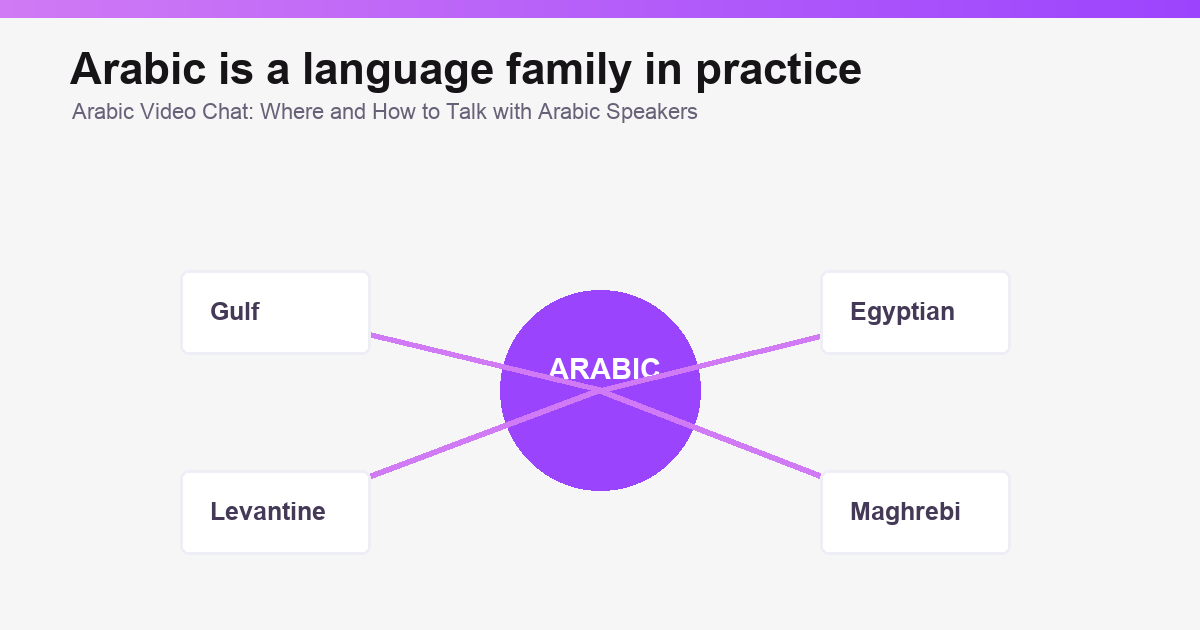
Modern Standard Arabic is used across formal media, writing, education, and public communication. Daily conversation usually follows regional varieties. Four broad groups often encountered online are Gulf, Egyptian, Levantine, and Maghrebi Arabic, although each contains further local differences.
Knowing that Arabic dialects vary prevents a common mistake: assuming a phrase learned for one region will sound natural everywhere. People who want to chat with Arabic speakers should treat dialect as context, not a test.
For focused one-to-one calls, 1v1 Video Chat with Real People | Chamet gives users a direct route into Chamet's private calling experience.
Route A, shared Arabic: ask whether the person prefers a regional dialect or more formal Arabic. Use simple sentences until you understand each other's pace.
Route B, Arabic plus English: switch only when needed. Repeating the same idea in two languages can support Arabic language exchange without turning the call into constant translation.
Route C, beginner Arabic: explain your level, ask for one correction at a time, and keep the first call short. An Arabic video chat beginner benefits more from five understood sentences than twenty memorized phrases.
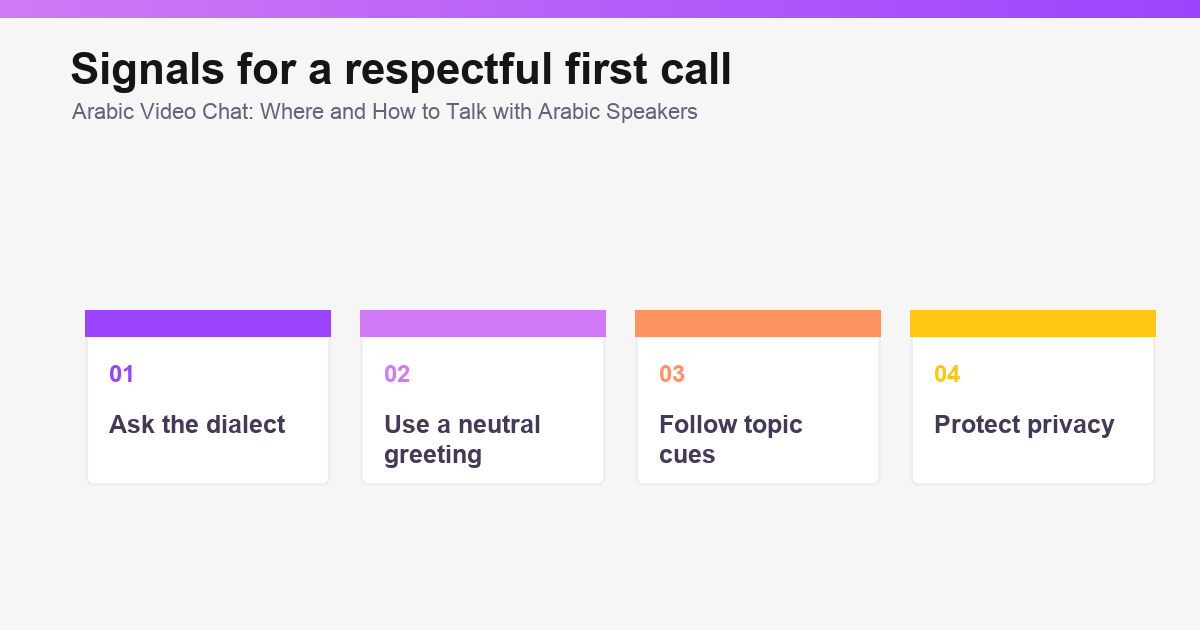
Start with a simple greeting, your name or nickname, and a preference question. Then choose an ordinary topic: food, music, football, films, travel, study, work interests, or local weather.
Avoid guessing religion, nationality, family expectations, politics, or relationship status. The Arabic-speaking world is diverse. To chat with Arabic speakers respectfully, let the other person decide when a topic becomes personal.
On Chamet: 1v1 Video Chat & Live Video Call App - Make Chat Borderless, users can move among 1v1 calls, live rooms, Party Rooms, and translated conversations. That flexibility is useful when a private call feels too intense and a social setting offers an easier start.
Translation can clarify a noun, a short question, or a missed phrase. It can struggle with humor, politeness levels, idioms, and dialect vocabulary. During Arabic video chat, confirm meaning instead of treating a translated line as final.
For Arabic language exchange, agree on correction style. Some people want every error corrected; others want the conversation to flow. Ask once and follow the answer. When Arabic dialects differ, a speaker may offer a more widely understood alternative without saying your version is wrong.
Camera use, mixed-gender conversation, and personal disclosure can feel different from person to person. Do not turn cultural sensitivity into a new assumption. Ask permission before discussing private life, taking a screenshot, moving platforms, or inviting someone to a group room.
A strong Arabic video chat experience is private and safe. Keep documents, addresses, work details, financial information, and other people's faces out of the frame. Leave if anyone requests money, account codes, private images, or secrecy.
Chamet's Community Safety | Chamet page describes the platform's adult-only rule, moderation, reporting, blocking, privacy expectations, and action against scams. These controls support people who chat with Arabic speakers across unfamiliar contexts.
End by naming one useful detail: a song to hear, a dish to try, a phrase to practice, or a regional word to remember. This gives Arabic language exchange continuity. It also shows that you listened.
Use Chamet: Live Video Chat & 1v1 Calls with Strangers when a browser start is more convenient. Test your microphone, keep the background neutral, and ask about Arabic dialects before assuming a language level.
'%20stroke-width='2'%20stroke-linecap='round'%20stroke-linejoin='round'/%3e%3c/svg%3e)
For Arabic video chat, ask the other person. Modern Standard Arabic may provide common ground, but many people are more comfortable in regional speech.
To chat with Arabic speakers, state your level, use short sentences, ask for a slower pace, and keep correction mutual.
Understanding varies by speaker, exposure, and region. Arabic dialects can differ substantially, so clarification is normal.
An Arabic language exchange works best when both people agree on language balance, correction style, topics, and boundaries.
Join millions of users and meet your next best friend today.