Is Hindi video chat only for fluent speakers?
No. Hindi video chat can work for beginners if both people agree on the pace, use short sentences, and accept correction.

 Chamet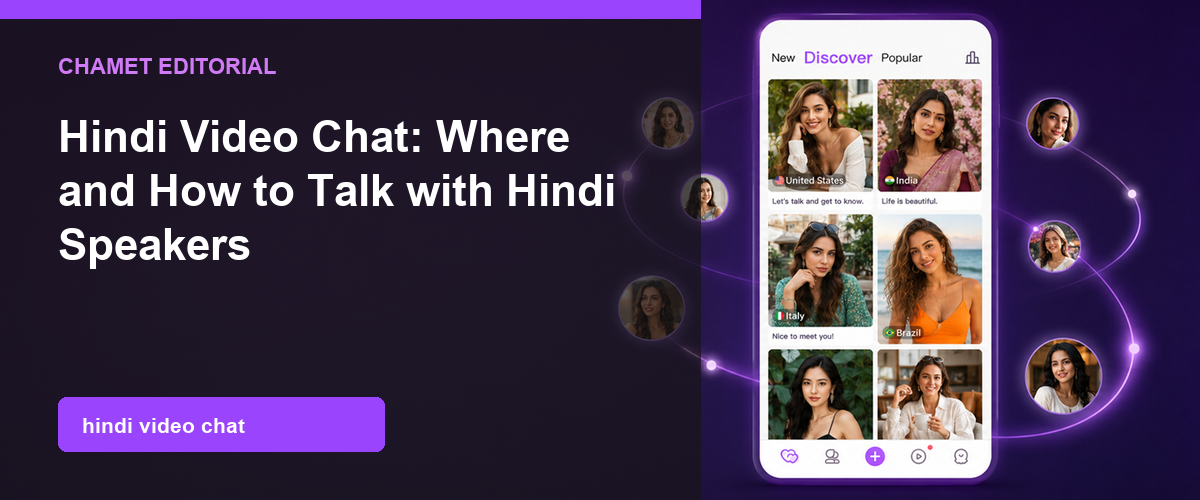
A useful Hindi video chat does not require flawless Hindi. It requires a shared expectation. One person may want casual conversation, another may want language practice, and a third may be comfortable switching between Hindi and English. Agreeing on the mode during the first minute prevents most awkward calls.
Hindi is widely used, while English also has an official role in Union government work in India. In everyday conversation, many speakers move naturally between Hindi, English, and regional languages. Do not assume every person from India prefers Hindi, or that every Hindi speaker lives in India.
Ask one direct question: "Would you like Hindi, English, or both?" That turns Hindi language exchange into a mutual choice. If you want to chat with Hindi speakers, avoid treating the other person as a free tutor. Offer something in return, such as English practice, your own language, or a cultural exchange.
1v1 Video Chat with Real People | Chamet is Chamet's focused route for a private and safe one-to-one call when you want fewer distractions than a public room.
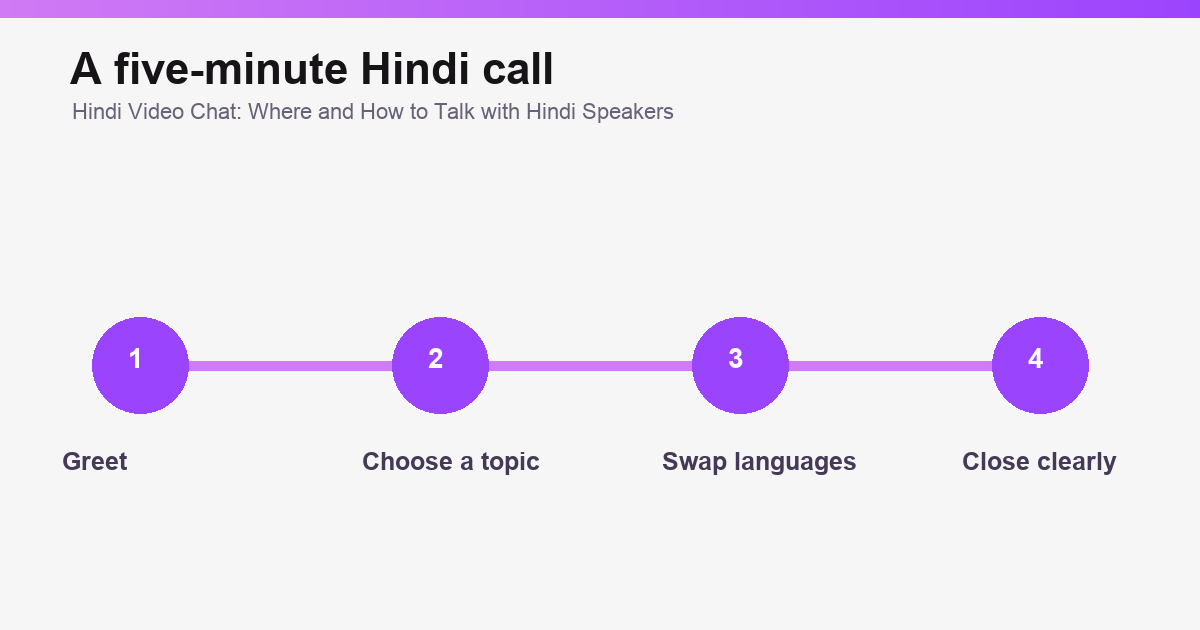
Try "Namaste, aap kaise hain?" for a polite hello, or simply say hello and ask which language feels comfortable. Explain your level in one sentence: "I understand some Hindi, but I speak slowly."
Food, music, films, work routines, study, travel, and weekend plans are easy. A Hindi video chat becomes harder when the first question is too broad or personal.
Give Hindi two minutes, then English or another shared language two minutes. This structure makes Hindi language exchange balanced. It also gives each person a chance to be confident and a chance to learn.
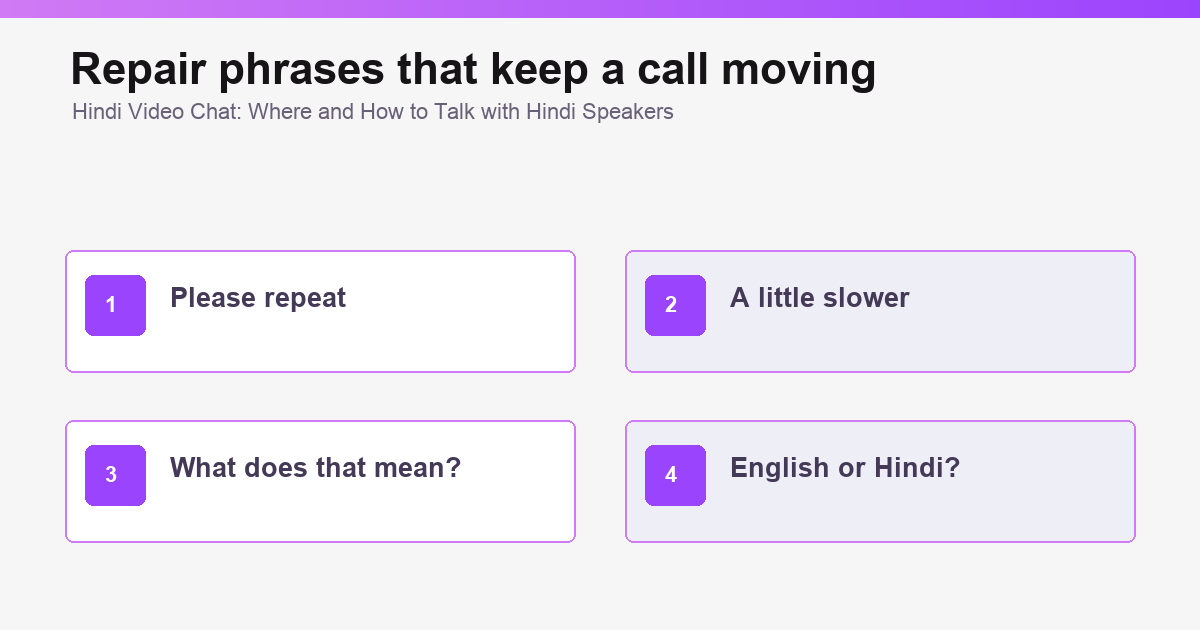
Say "Please repeat," "A little slower," or "What does that word mean?" Pretending to understand creates more confusion than asking for help. Real-time translation can support a difficult phrase, but it should not interrupt every sentence.
Repeat one new word you learned, thank the person, and decide whether another call makes sense. A clear close is better than disappearing.
Translation is most helpful for names, unfamiliar words, and short explanations. It is less reliable for humor, slang, gendered language, and context. During Hindi video chat, use short sentences and let the other person correct the meaning.
Chamet describes real-time translation as part of its cross-language calling experience. The feature fits calls where users want to chat with Hindi speakers but do not share the same first language. Explore the wider platform through Chamet: 1v1 Video Chat & Live Video Call App - Make Chat Borderless.
Move from low-risk to more personal topics:
This ladder makes Hindi language exchange feel conversational. It also helps a beginner chat with Hindi speakers without relying on an interview-style list of questions.
Language interest is not proof of trust. Do not show an address, identity document, account code, school name, workplace badge, or payment information. Keep the first call short and stay on-platform until the other person's behavior is consistent.
For Hindi video chat, leave if someone pressures you for money, private images, or another app. Chamet's Community Safety | Chamet page explains its adult-only rule, reporting, blocking, moderation, privacy expectations, and scam restrictions.
The browser route, Chamet: Live Video Chat & 1v1 Calls with Strangers, can be useful when you want to test camera framing and connection quality before a longer call. Real-time translation is a support tool, while patience and boundaries do most of the work.
'%20stroke-width='2'%20stroke-linecap='round'%20stroke-linejoin='round'/%3e%3c/svg%3e)
No. Hindi video chat can work for beginners if both people agree on the pace, use short sentences, and accept correction.
To chat with Hindi speakers, ask which language they prefer, avoid assuming nationality or background, and make the exchange useful for both people.
No. Real-time translation helps with gaps, but tone, slang, and context still need human clarification.
A good Hindi language exchange has a shared goal, balanced speaking time, clear correction preferences, and a respectful end point.
Join millions of users and meet your next best friend today.