What are the biggest video chat scams?
The most common video chat scams involve romance pressure, investment links, fake emergencies, blackmail threats, and requests for login codes or payment. The pattern is usually urgency plus secrecy.

 Chamet
Video chat scams usually begin with speed. Someone asks to move fast, avoid the platform, open a link, send money, or prove trust before a normal conversation has even started. That is why video chat scams are not only a technology problem. They are a pressure problem.
The first rule is simple: a real person does not need your bank details, private documents, login code, or off-platform payment to have a friendly call. If the mood changes from conversation to pressure, treat it as one of the clearest video chat scam signs.
For a safer Chamet starting point, review Chamet: 1v1 Video Chat & Live Video Call App - Make Chat Borderless, open Chamet: Live Video Chat & 1v1 Calls with Strangers, and check Safe Video Chat: Meet Real People Privately and Safely when you want the deeper landing page.
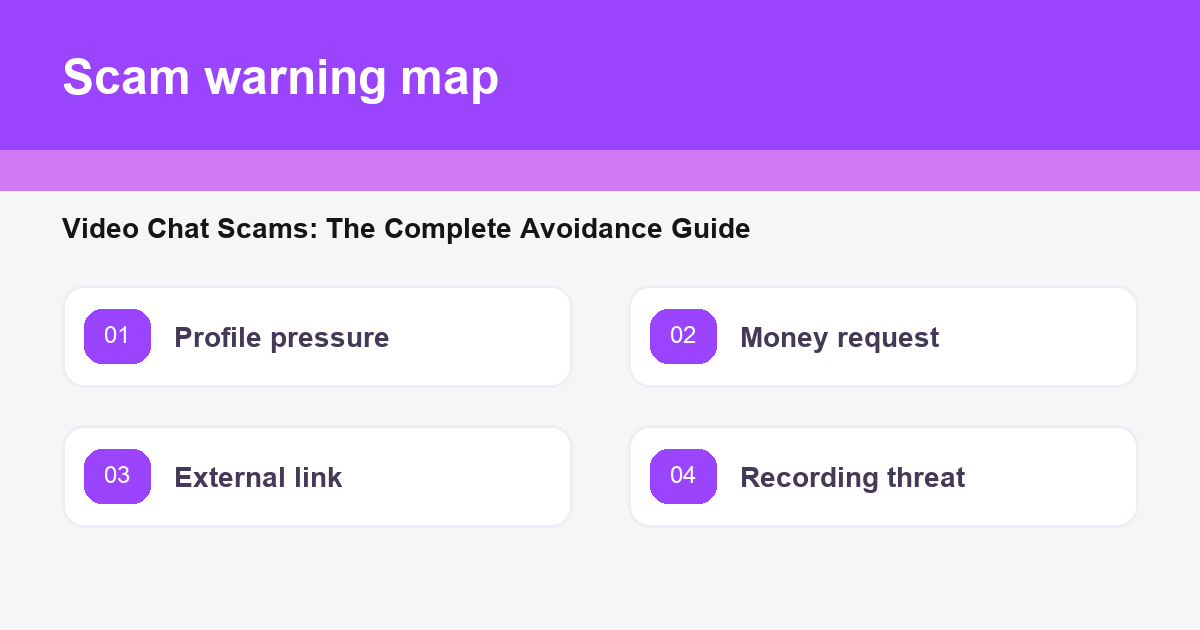
Romance pressure is the most common pattern. A stranger creates emotional intensity, asks for help, and then turns the call into a money request. Investment pressure is another version: the caller talks about crypto, trading, or quick income and sends you outside the app. Recording threats are more direct. Someone claims they captured the call and demands payment.
Fake video chat profiles often use polished photos, inconsistent stories, and strange timing. They may avoid showing their face clearly, refuse normal questions, or ask you to switch to another platform. Fake video chat profiles also tend to reuse scripts: sudden love, sudden emergency, sudden opportunity.
When you see video chat scam signs, do not debate. End the call, block, and report. Online video chat safety works best when the user acts early instead of trying to investigate alone.
Use a platform that gives you reporting, moderation, visible rules, and a way to leave instantly. Check whether the app explains its privacy and safety policies. Chamet's community pages describe age rules, privacy protection, reporting, and enforcement, which makes online video chat safety easier to understand before you start.
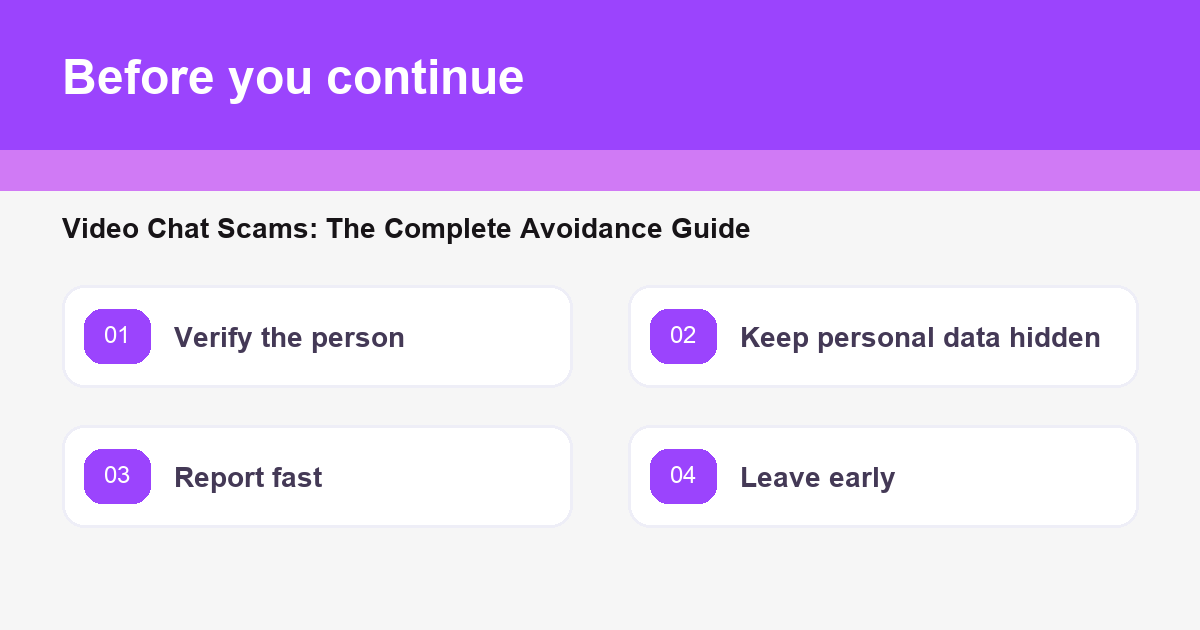
Protect your background, documents, full name, workplace, school, and location. Video chat scams often depend on small pieces of information gathered over time. A simple habit helps: if you would not post the detail publicly, do not show it on camera.
Pause when the caller creates urgency. Scammers want decisions before reflection. Ask yourself whether the conversation still feels mutual. If the other person keeps pushing money, links, account codes, private images, or screenshots, you are likely seeing video chat scam signs.
Do not send verification codes. Do not install remote access software. Do not click shortened links. Do not move to a private payment channel. These rules sound basic because video chat scams often succeed by making basic rules feel rude to enforce.
If you clicked a suspicious link, change passwords from a clean browser and enable stronger account protection. If money was involved, contact the payment provider quickly. If private content was threatened, preserve evidence and report through the platform.
Fake video chat profiles should be reported even if no money was lost. Reporting helps the platform connect patterns across accounts. Strong online video chat safety depends on fast user reporting and platform response working together.
Choose apps that support visible reporting, active moderation, privacy rules, clear age restrictions, and real-person signals. The safest choice is not always the app with the fastest start. It is the app where you can leave, report, and protect yourself without friction.
Video chat scams will keep changing, but the core defense stays stable: slow down, verify behavior, avoid off-platform pressure, and choose a service that treats safety as part of the product.
Before spending more time in live calls, review Community Safety | Chamet for platform rules and Help Center | Chamet for setup or account guidance.
'%20stroke-width='2'%20stroke-linecap='round'%20stroke-linejoin='round'/%3e%3c/svg%3e)
The most common video chat scams involve romance pressure, investment links, fake emergencies, blackmail threats, and requests for login codes or payment. The pattern is usually urgency plus secrecy.
Fake video chat profiles often use inconsistent stories, avoid normal face-to-face interaction, push you to another app, or repeat emotional scripts too quickly.
The strongest video chat scam signs are requests for money, private images, verification codes, outside links, or pressure to keep the conversation secret.
Online video chat safety improves when you use trusted apps, hide sensitive details, keep conversations on-platform, report suspicious behavior, and leave calls as soon as pressure begins.
Join millions of users and meet your next best friend today.