What is 1v1 video chat in simple terms?
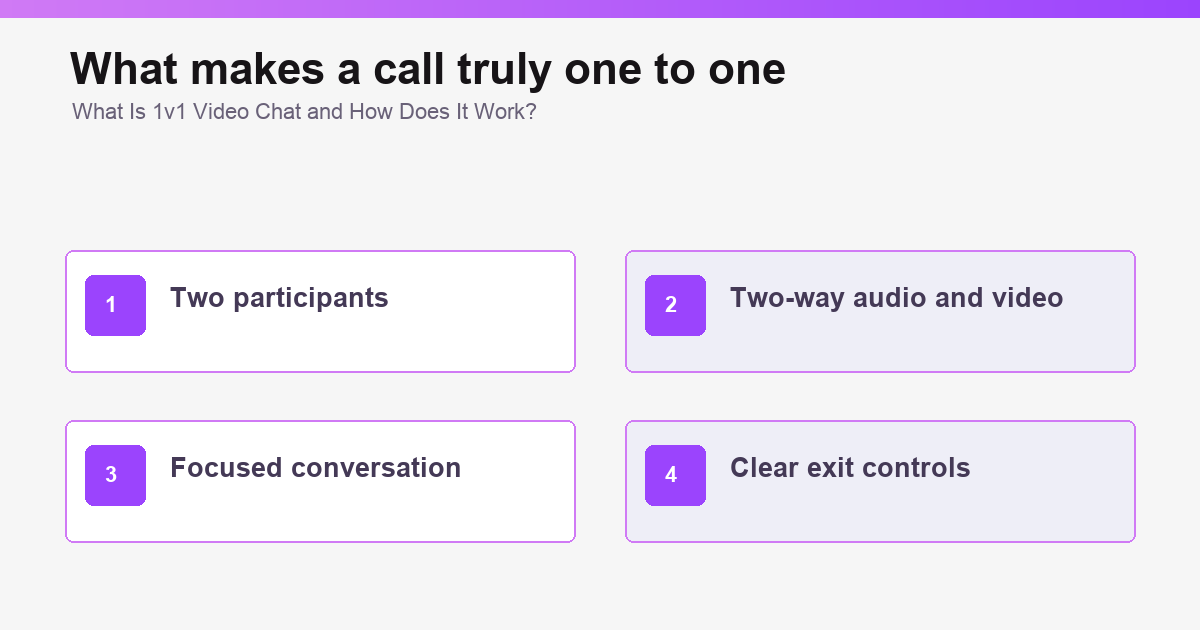
What is 1v1 video chat? It is a live video conversation between two participants, with each person able to see, hear, and respond to the other.

 Chamet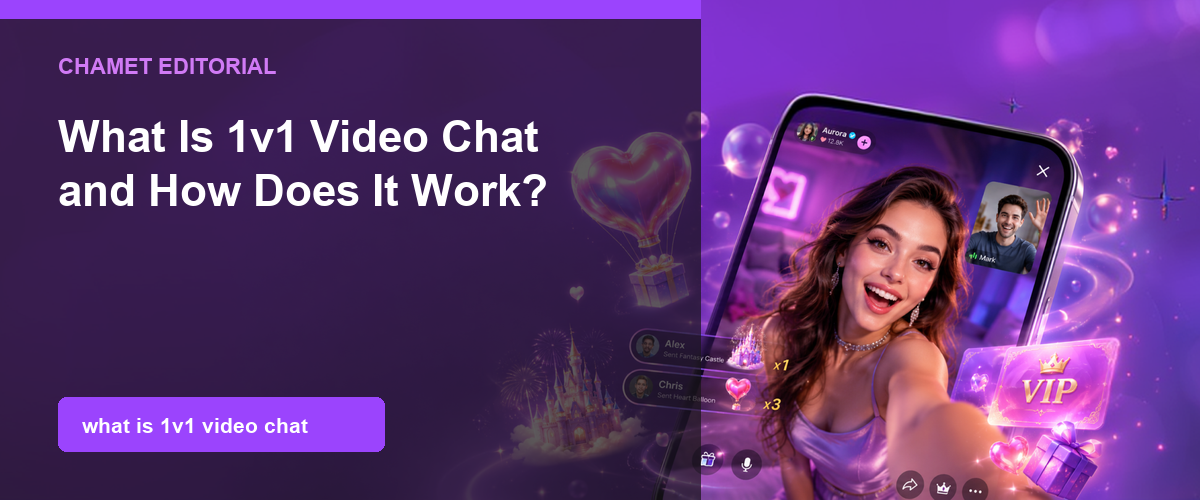
What is 1v1 video chat? It is a live, two-person video conversation in which each participant can usually see and hear the other in real time. Unlike a livestream with an audience or a group room with several speakers, one on one video chat keeps the interaction focused on two people.
A private video call gives two participants a shared audio-and-video space with controls to mute, switch cameras, leave, block, or report. "Private" describes who is in the conversation, not permission to ignore safety. A responsible service should still explain moderation, privacy, recording, and reporting.
If you are evaluating the format rather than only the definition, 1v1 Video Chat with Real People | Chamet shows how Chamet presents a direct call experience with real people.
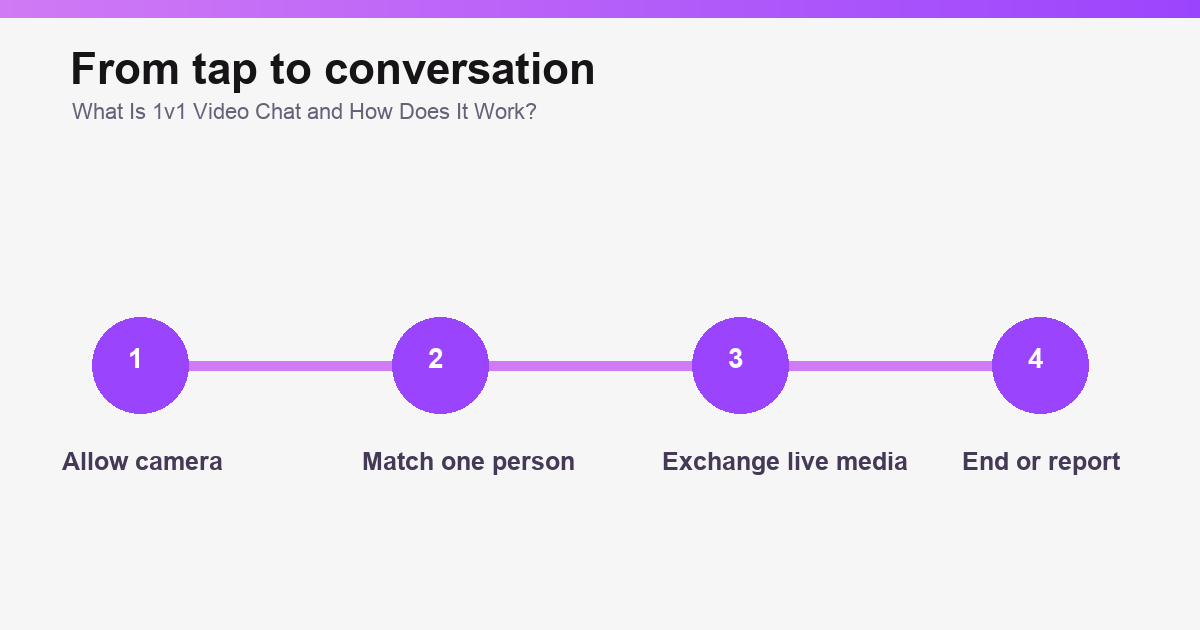
The screen can change in a second, but several steps occur underneath.
On the web, a service normally uses browser media APIs to ask for permission. MDN explains that `getUserMedia()` can turn on the camera or microphone only after the user grants access. Denying permission should prevent the service from capturing those inputs.
A 1v1 video call may begin from a profile, a friend list, a host list, or a matching system. In all cases, the product has to identify the two endpoints that will join the call.
Many browser video products use WebRTC. Before media can flow, the applications exchange technical descriptions and possible network routes through a process commonly called signaling. STUN or TURN services may help establish or relay the connection when direct routing is not possible.
The camera and microphone create local media tracks. The other participant sends their tracks in return. The interface displays the incoming stream and normally shows a smaller local preview.
A usable private video call keeps mute, camera, switch-camera, end, block, and report controls easy to reach. These controls are part of the experience, not optional decoration.
This technical sequence is the practical answer to what is 1v1 video chat: a two-person format built from permission, matching, connection setup, live media, and user controls.
The phrase one on one video chat describes the number of participants. It does not prove that packets travel directly from one phone to the other. Commercial services may use TURN relays, media infrastructure, moderation systems, or regional routing to keep calls available and support product policies.
That distinction matters because "peer connection" and "private" can be misunderstood as security guarantees. Users should read the platform's current privacy and safety information instead of inferring it from the layout.
Livestream: one creator broadcasts to an audience. Viewers may comment, react, or send gifts, but they are not equal participants in the same way.
Party or group room: several people can speak or appear together. The energy is more social, while attention is divided.
One on one video chat: two participants share the call. It suits direct conversation, language practice, personal introductions, and situations where a group would feel distracting.
Recorded video message: the sender and receiver do not need to be present at the same time, so it is not a live 1v1 video call.
Chamet: 1v1 Video Chat & Live Video Call App - Make Chat Borderless combines direct calls with live rooms, Party Rooms, Moments, translation, regional discovery, gifts, and interactive games. That makes the private video call one option inside a larger social video platform.
Chamet says it connects users across more than 150 countries and Google Play shows more than 50 million downloads. Real-time translation can support a 1v1 video call when the two people do not share a first language. Verification and reporting features are designed to add structure around discovery.
For readers still asking what is 1v1 video chat, the best practical test is whether the product gives two people a focused live conversation with clear permission, privacy, and exit controls.
Check the frame before joining. Remove mail, work badges, identity documents, school names, street views, and other location clues. Use headphones when privacy matters, test the microphone, and choose a stable connection.
During a one on one video chat, do not share account codes, financial information, private images, or an exact address. Leave if someone creates pressure, asks for money, or refuses boundaries. Chamet's Community Safety | Chamet explains its adult-only rule, moderation, blocking, reporting, privacy expectations, and prohibited scams.
For a browser start, open Chamet: Live Video Chat & 1v1 Calls with Strangers. Grant only the permissions needed for the call and close the camera when the session ends.
'%20stroke-width='2'%20stroke-linecap='round'%20stroke-linejoin='round'/%3e%3c/svg%3e)
What is 1v1 video chat? It is a live video conversation between two participants, with each person able to see, hear, and respond to the other.
A private video call limits the conversation to two participants, but privacy also depends on platform policy, data handling, device security, and whether either person records the screen.
Not always. A 1v1 video call can run in a compatible browser when the service supports web calling and the user grants camera and microphone access.
One on one video chat can reduce public exposure, but it still involves another person. Reporting tools, moderation, privacy habits, and an easy exit remain important.
Join millions of users and meet your next best friend today.