Is 1v1 always better for connection?
No. It is better for focused attention and personal follow-up. Groups can create belonging through shared activity and repeated participation.

 Chamet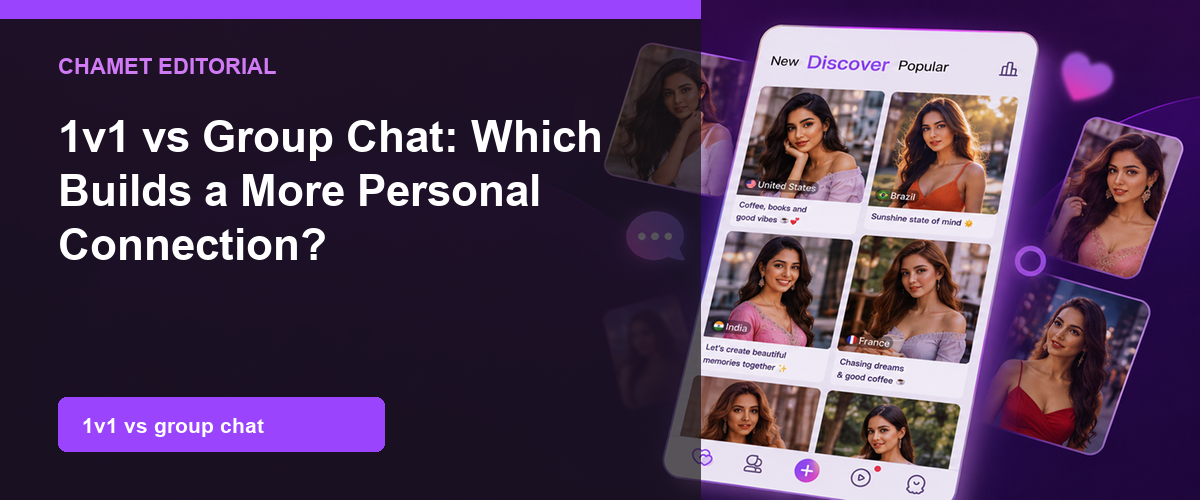
The useful 1v1 vs group chat question is not “Which format wins?” It is “What does this conversation need?” One-to-one calls concentrate attention and make personal follow-up easier. Groups create energy, shared activity and wider social discovery.
In a one on one conversation, both people know when it is their turn and can notice smaller changes in tone or expression. There is less competition for the floor and less temptation to become a silent observer.
A group video chat divides attention among several faces, comments and side conversations. That can reduce depth, but it also removes the pressure of carrying half the interaction.
For direct calls, 1v1 Video Chat with Real People | Chamet shows Chamet’s one-person-at-a-time experience.
Personal subjects often fit private video chat because the audience is limited. Someone can ask a follow-up without turning the answer into a public performance. Difficult feedback and conflict repair also benefit from privacy.
The same intimacy can feel intense when two people have just met. A group gives newcomers time to watch the social norms before speaking. In 1v1 vs group chat, lower pressure may matter more than immediate depth.
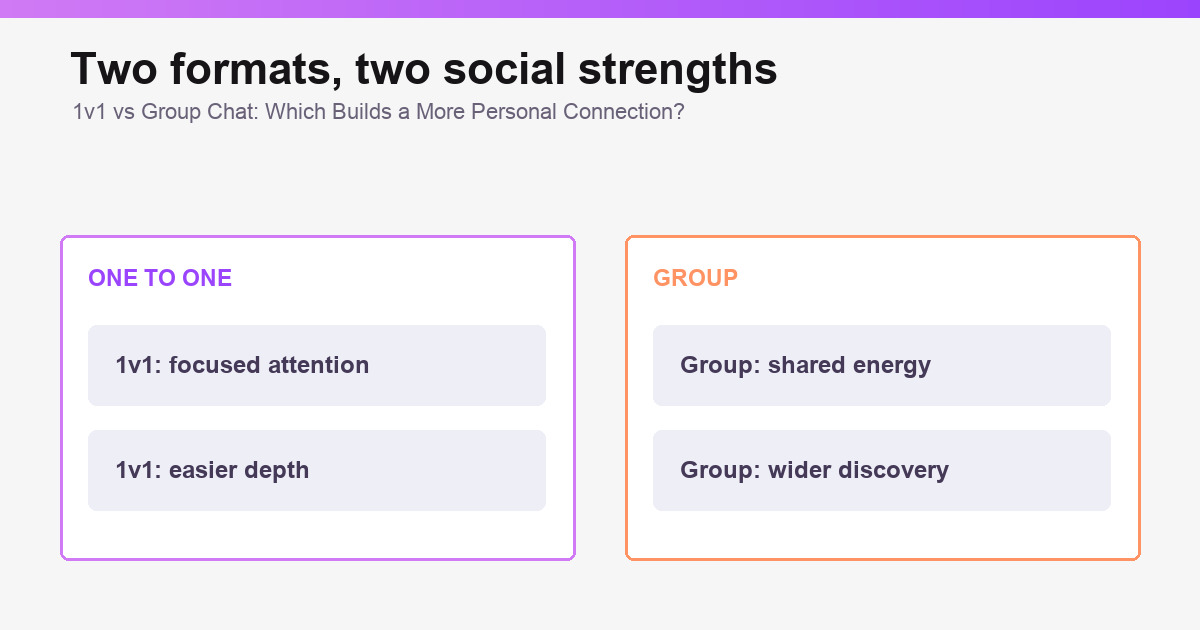
Groups are strong when the activity is collective. Games, celebrations, live reactions and several personalities create momentum that a two-person call may not reproduce.
Chamet Party Rooms support up to five participants and interactive games, while voice rooms offer a group option without requiring everyone on camera. Chamet: 1v1 Video Chat & Live Video Call App - Make Chat Borderless presents these formats alongside private calls and live content.
A group video chat therefore wins for shared play and broad discovery, not necessarily for a delicate personal conversation.
A one on one conversation produces fewer details but gives each one more space. It is easier to remember a job interview, a family event or a goal when only one story is being told.
Groups create more possible connections. The best next step may be to notice one person you enjoyed speaking with and later continue through private video chat, provided both people are comfortable.
Private does not automatically mean safe. In a direct call, the other person has your full attention and may apply pressure without witnesses. Keep personal information private and leave when boundaries are ignored.
Groups can provide social context, but public embarrassment, harassment or unwanted recording can still occur. The 1v1 vs group chat safety decision depends on moderation, reporting tools, privacy habits and the people involved.
Start in a group when you want to observe, play or meet several people. Move to a direct call when both people want a focused conversation. Return to a group when the energy drops or the topic suits several participants.
This makes 1v1 vs group chat a sequence rather than a permanent choice. Chamet’s combination of calls, Party Rooms and voice rooms supports that movement.
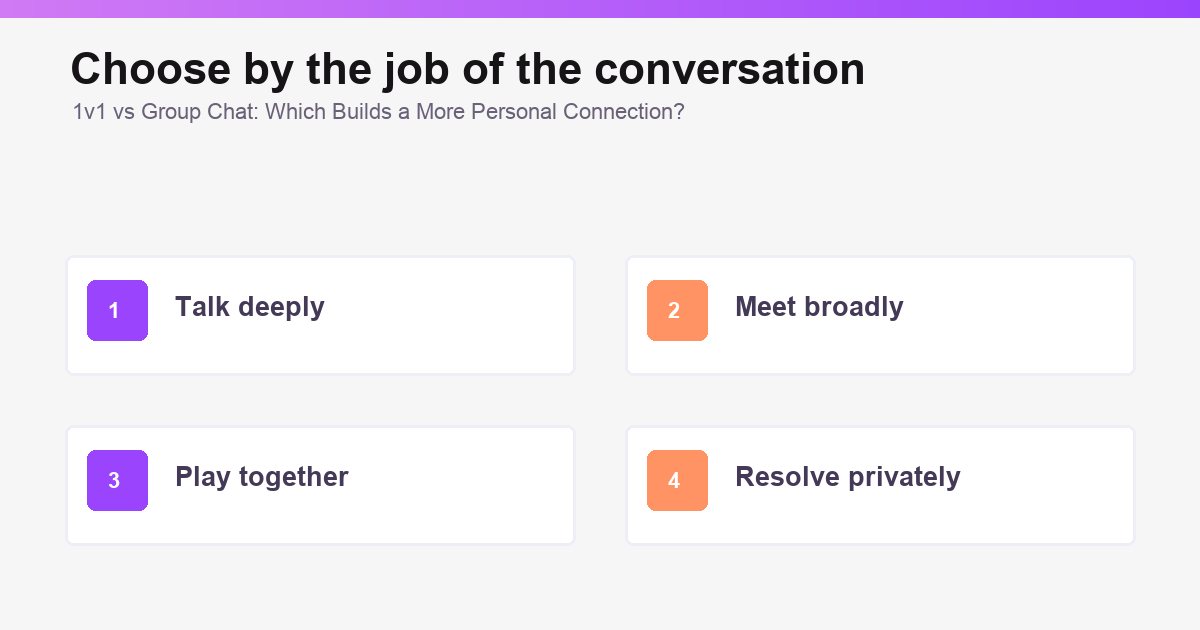
Choose private video chat for a sensitive topic, focused introduction, language practice or relationship repair.
Choose group video chat for games, events, broad discovery, shared entertainment or a lower-pressure first appearance.
Choose a one on one conversation when listening matters more than energy. Choose a group when energy matters more than uninterrupted depth.
Open Chamet: Live Video Chat & 1v1 Calls with Strangers when you are ready to choose a format. The strongest answer to 1v1 vs group chat is often to use both at different moments.
'%20stroke-width='2'%20stroke-linecap='round'%20stroke-linejoin='round'/%3e%3c/svg%3e)
No. It is better for focused attention and personal follow-up. Groups can create belonging through shared activity and repeated participation.
A group video chat can feel easier because attention is distributed, but some people find turn-taking and multiple speakers more demanding.
Move to a direct call when both people want to discuss something personal, detailed or sensitive. Ask rather than assuming.
Use a group for lower-pressure observation or a direct call for immediate focus. The best format depends on your comfort and goal.
Join millions of users and meet your next best friend today.