Does camera shyness mean I have social anxiety?
Not necessarily. Many people dislike seeing themselves on screen. Persistent or severe anxiety across social situations is something a qualified professional can assess.

 Chamet
Camera shyness can make a normal preview feel like a spotlight. This seven-day plan does not ask you to become fearless. It uses small, repeatable steps so your attention can gradually move from how you look to what the other person is saying.
This is general self-help, not mental-health treatment. If video call anxiety is intense, persistent or interfering with daily life, consider speaking with a qualified professional. NHS guidance recommends breaking difficult situations into smaller parts and practising them gradually.
Do not call anyone. Place the phone at eye level, open the camera preview and breathe normally for thirty seconds. Notice the urge to correct every expression without obeying it.
The first goal in building camera confidence is tolerance, not appearance. End after the planned time so the task stays manageable.
Say your name and one fact about your day. Watch the recording once with the sound on. Describe it in neutral language: “I looked away twice” is more useful than “I looked terrible.”
People who practice video calls often focus on imagined flaws that another participant would barely notice.
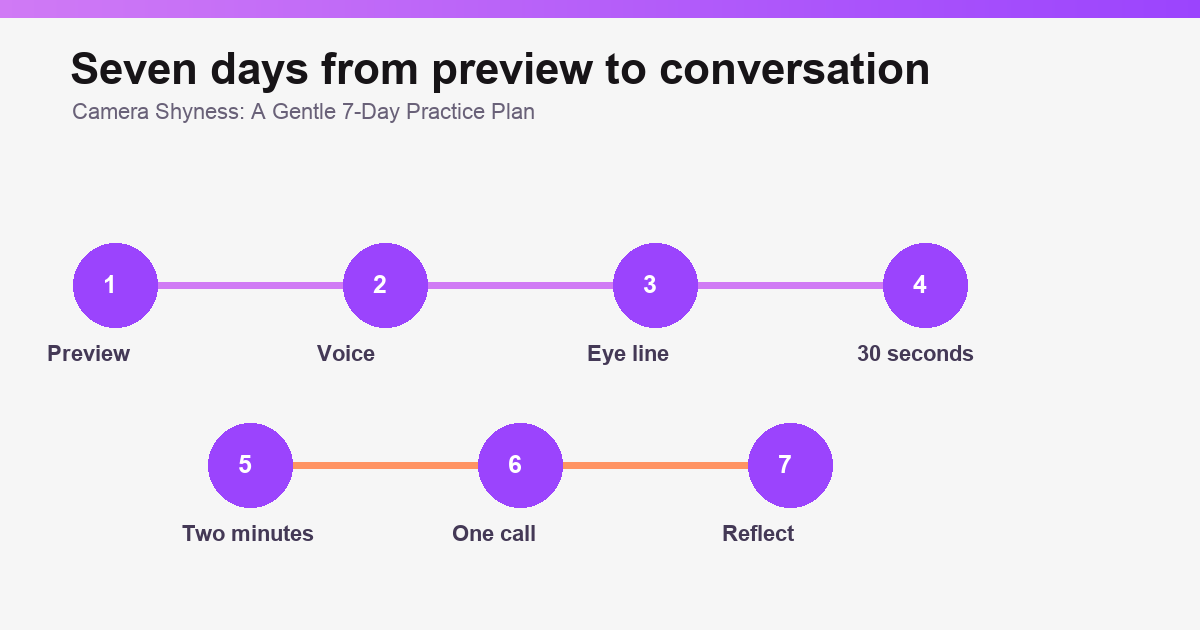
Record a twenty-second greeting. Look at the lens for the first sentence, then at your own eyes on screen. Learn the difference without trying to maintain lens contact constantly.
If camera shyness rises, relax your shoulders and focus on the words you want to communicate.
Call a trusted person and tell them the practice will be brief. Ask one simple question, listen, answer and leave at the planned time. A predictable call reduces the number of unknowns.
Afterward, rate video call anxiety from zero to ten and write what happened—not what you feared might happen.
Use the same person or another trusted contact. Keep one prompt nearby. Repetition matters more than increasing difficulty quickly, so repeat Day 4 if two minutes feels like too large a jump.
This is how practice video calls build familiarity: the camera becomes part of the conversation instead of the entire event.
Set a short limit and choose an environment with clear exit controls. 1v1 Video Chat with Real People | Chamet explains Chamet’s focused one-to-one experience. Keep personal information private and leave if a conversation crosses a boundary.
Your measure of camera confidence is not whether the call was perfect. It is whether you greeted the person, listened and made a deliberate decision to continue or end.
Write three columns: what I predicted, what happened, what I will try next. A call can feel uncomfortable and still be evidence that you handled it.
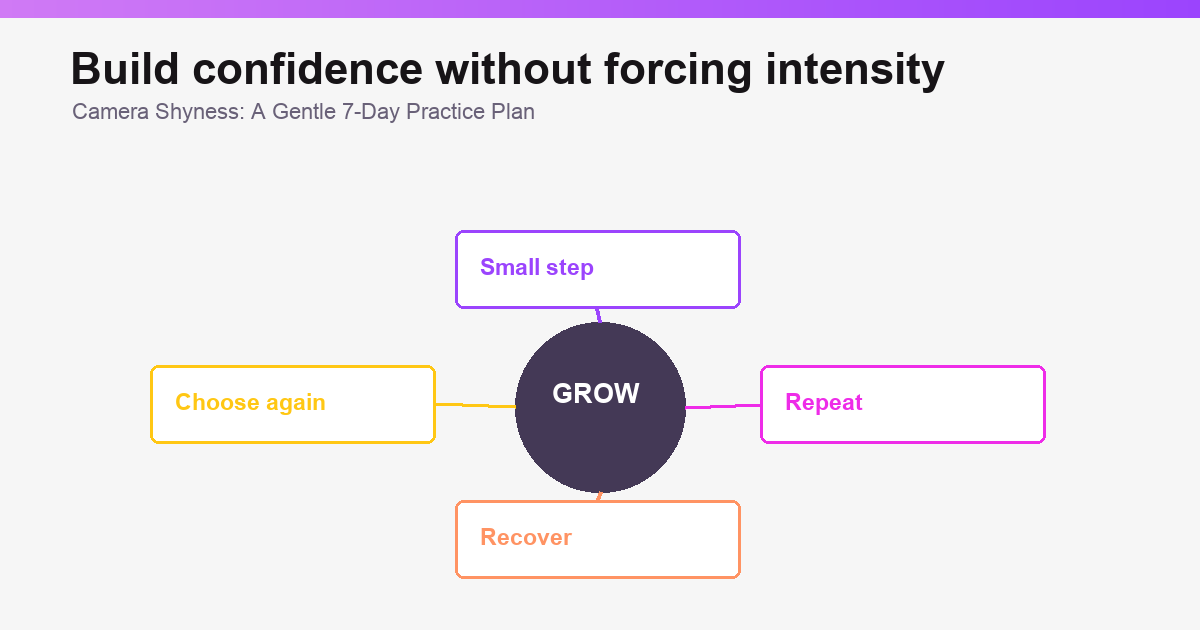
Choose one step to repeat next week. A gradual plan works because camera shyness becomes specific: the preview, the greeting, the silence or the unfamiliar person can each be practised separately.
Put both feet on the floor, take a slower breath, and name one thing you handled. Do not replay the whole call repeatedly. Decide whether the next step is a shorter call, a familiar person or a day of rest.
Chamet: 1v1 Video Chat & Live Video Call App - Make Chat Borderless provides private calls, live rooms and Party Rooms, but you control which format feels manageable. You do not have to move from a short call to a public room.
Do not treat discomfort caused by harassment or pressure as a confidence exercise. End, block or report. Healthy practice video calls never require you to tolerate unsafe behavior.
Open Chamet: Live Video Chat & 1v1 Calls with Strangers only when the next step fits your plan. Camera confidence grows through chosen practice, while video call anxiety deserves patience rather than self-criticism.
'%20stroke-width='2'%20stroke-linecap='round'%20stroke-linejoin='round'/%3e%3c/svg%3e)
Not necessarily. Many people dislike seeing themselves on screen. Persistent or severe anxiety across social situations is something a qualified professional can assess.
Hiding self-view can reduce distraction during a call. It can also help to practise briefly with the preview first so the image does not remain completely unfamiliar.
Short, regular sessions are usually easier to repeat than one long challenge. Adjust the pace when distress remains high after the practice ends.
Repeat any day or reduce the time. The plan is a ladder, not a deadline.
Join millions of users and meet your next best friend today.