Does OmeTV have moderators?
Yes. OmeTV moderation is described as 24/7 review of complaints, with screenshots and messages provided to moderators.

 Chamet
Is OmeTV safe? The evidence supports a qualified answer: OmeTV publishes strict live-video rules, reviews user reports around the clock, sends session evidence to moderators, and can automatically ban accounts after multiple complaints. Those controls reduce risk, but anonymous random matching can still expose users to misconduct, scams, false identity claims, or accidental privacy disclosure.
OmeTV asks users to report a rule violation instead of responding in kind. The report is the first operational layer of OmeTV safety. Without that signal, behavior that is difficult for automated systems to interpret may remain unseen.
For random video chat safety, leave before collecting evidence yourself. Do not keep an abusive session open, argue, or retaliate. Tap the reporting control and disconnect.
The rules say a complaint sends moderators a screenshot of the other person's video plus any message sent with the report. This makes OmeTV moderation more concrete than a vague promise to “review complaints.” It also means users should understand that a reported frame can become moderation evidence.
OmeTV prohibits obscenity, discrimination, threats, nudity, device screens, signs, virtual cameras, advertising, links, and spam. The rules are unusually specific about camera composition. Is OmeTV safe from accidental bans? Not completely; the service says even brief or unintentional violations can lead to enforcement.
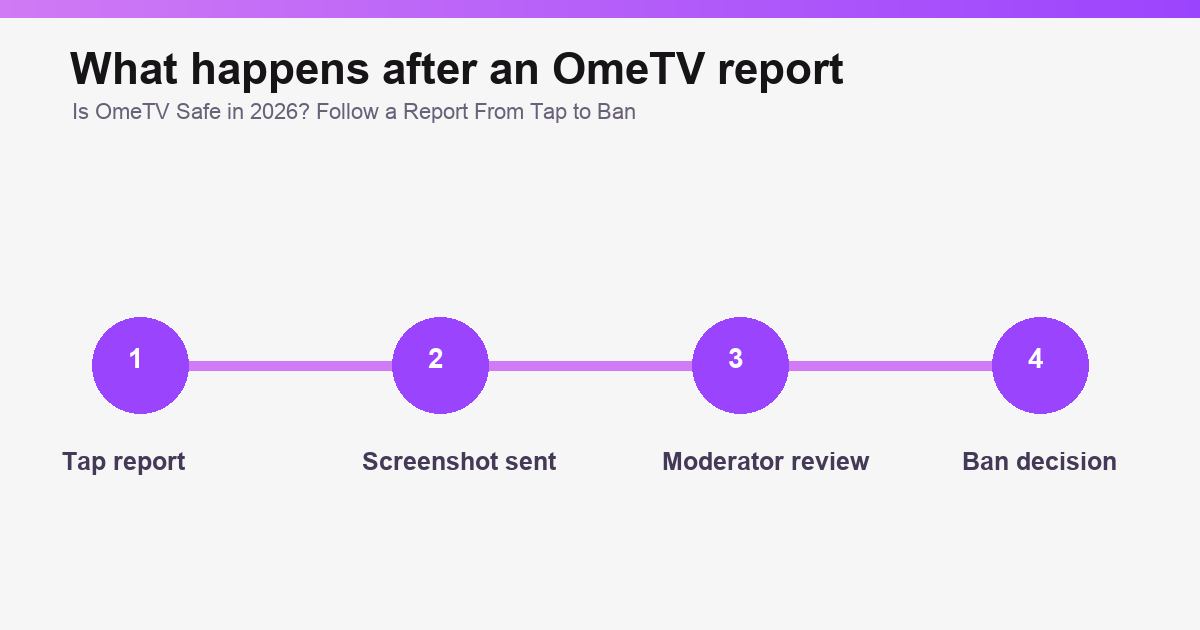
The official rules state that moderators review complaints 24/7, including weekends and holidays. A moderator decides whether the reported person should be banned. OmeTV moderation also includes automatic bans when a user receives multiple complaints in a short period, with factors intended to reduce accidental or unjustified bans.
This layered OmeTV moderation is meaningful, but it remains an enforcement system rather than identity verification. A person on camera can still misstate their age, location, relationship, or intent.
The platform says violators can be banned and minors are prohibited. Strong enforcement supports OmeTV safety, yet no public rule can guarantee that inappropriate content is intercepted before a user sees it. Chamet Official: Video Chat, Live & Party Rooms offers a profile-led alternative with verification features and several social formats.
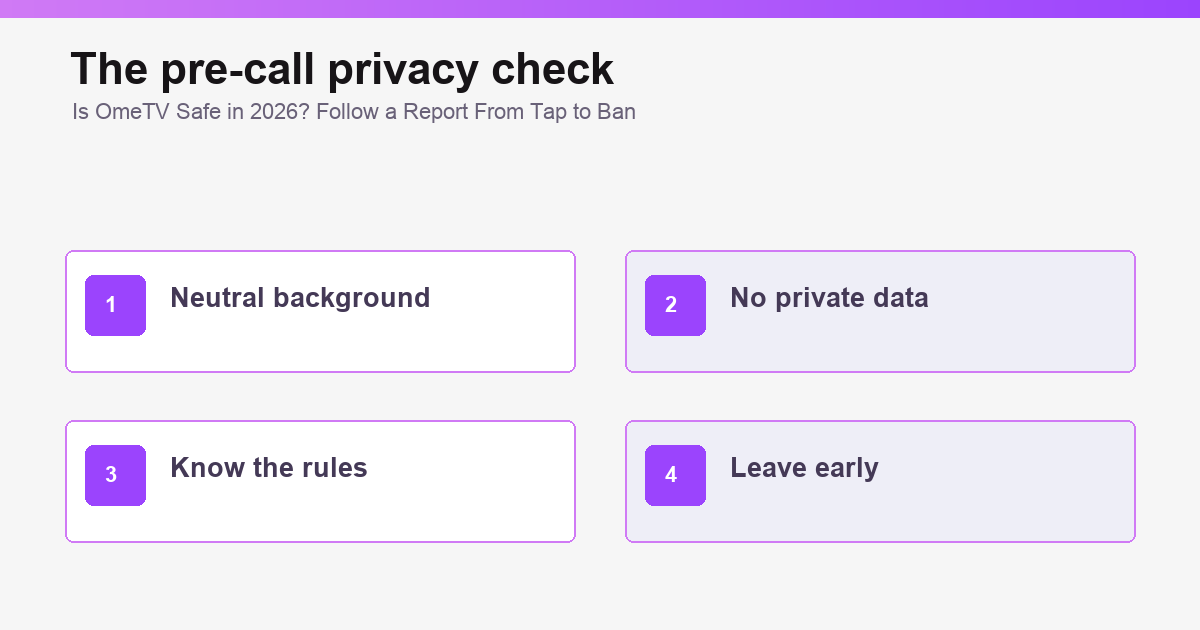
That distinction matters when answering is OmeTV safe. Platform controls help; user behavior closes the remaining gap. Keep your face visible if using OmeTV, but frame the camera against a neutral wall and remove mail, badges, school or work logos, family photos, and screens.
OmeTV describes an anonymous chat experience and warns users not to share sensitive data. Anonymous matching also means a lost connection usually cannot be restored. Random video chat safety therefore depends on not rushing to move the conversation elsewhere.
For a profile-led alternative, compare Best OmeTV Alternative for Safer 1v1 Video Chat.
Before connecting, read the rules, test lighting, choose a neutral background, and decide what you will not disclose. During the call, do not send money, codes, documents, intimate media, or exact location. After a violation, report, block where available, and save only evidence needed for legitimate support or law enforcement.
Open Chamet: Live Video Chat & 1v1 Calls with Strangers when you want a different social-video model. The final answer to is OmeTV safe is conditional: its documented controls are substantial, but random video chat safety still requires quick exits and disciplined privacy choices.
'%20stroke-width='2'%20stroke-linecap='round'%20stroke-linejoin='round'/%3e%3c/svg%3e)
Yes. OmeTV moderation is described as 24/7 review of complaints, with screenshots and messages provided to moderators.
Yes. Its rules describe automatic bans after multiple complaints in a short time, alongside human review factors.
No stranger-chat service is a good place for sensitive details. OmeTV safety guidance explicitly tells users to mind their privacy.
Is OmeTV safe for every session? No guarantee is possible. It has clear rules and enforcement, while anonymous matching still creates exposure and identity risks.
Join millions of users and meet your next best friend today.