Is making friends online adult life harder than school?
It can feel harder because adults have less repeated unplanned contact. Creating a recurring online place helps replace that missing structure.

 Chamet
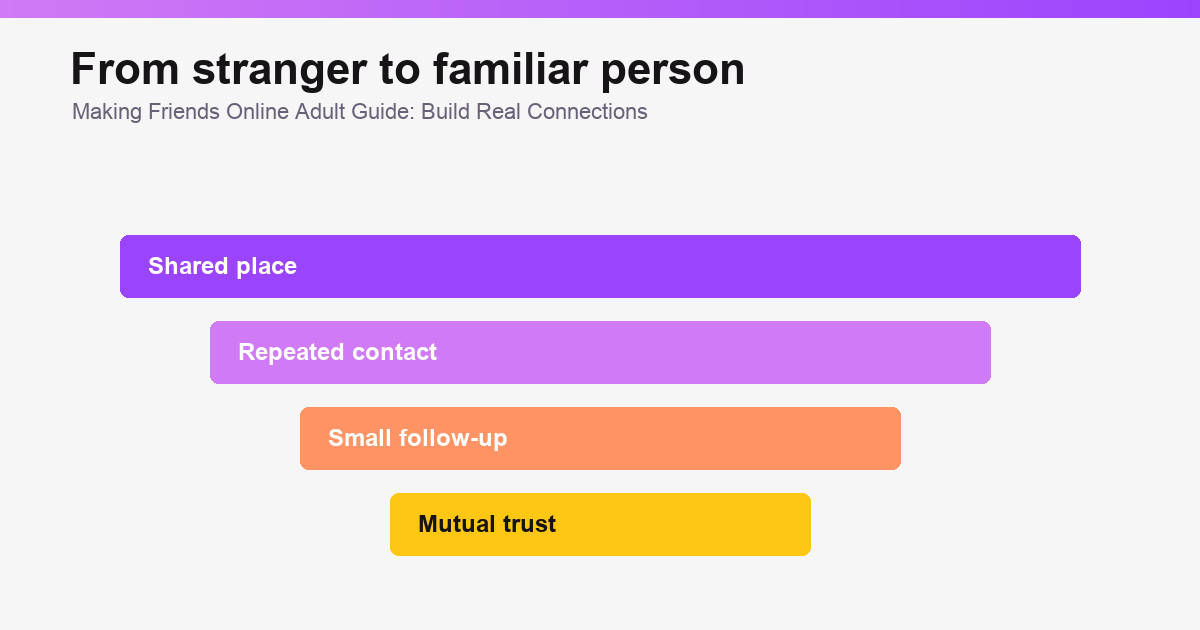
A useful making friends online adult strategy begins with repetition, not instant intimacy. Adults often have less unstructured time than students, so friendship needs a place to happen, a reason to return and a small follow-up that turns recognition into familiarity.
Research on adult friendship consistently points toward quality, maintenance and positive interaction—not simply a large contact list. Online tools can create the introduction; reciprocal effort builds the relationship.
It is easier to make friends online in spaces organized around an activity: language practice, games, professional interests, live creators, local groups or recurring rooms. A one-time random encounter can be enjoyable, but a repeated environment gives both people shared context.
Chamet: 1v1 Video Chat & Live Video Call App - Make Chat Borderless includes direct calls, live content, Party Rooms, games and Moments. Different formats offer different levels of pressure and repeat contact.
Conversation one: recognition. Learn one interest and one ordinary detail. Keep the exchange light.
Conversation two: memory. Return to something they mentioned: “How did that interview go?” Remembering creates continuity.
Conversation three: invitation. Suggest another bounded interaction: “I will be in this room again on Friday if you want to join.”
This making friends online adult progression prevents two common extremes: treating every chat as disposable or forcing closeness after one good conversation.
An online friendship grows faster when people do something together. Watch the same event, practise a language, play a Party Room game, recommend a song, or compare progress on a hobby.
Shared activity also removes pressure to keep producing personal disclosures. Adults can make friends online by being reliable and enjoyable before becoming deeply vulnerable.
1v1 Video Chat with Real People | Chamet is useful when a direct face-to-face conversation feels like the right next step.
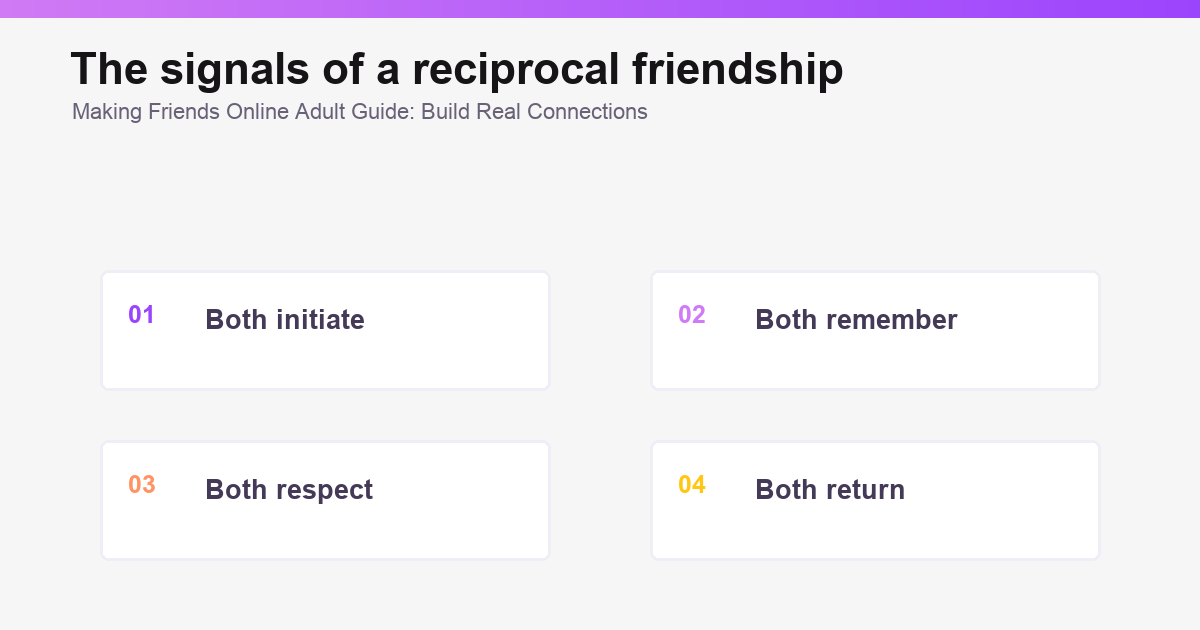
Healthy adult friendship is not measured by immediate response time. Look for a broader pattern: both people initiate sometimes, remember details, respect “no,” and return to the conversation without constant persuasion.
If you always ask, schedule and repair while the other person only responds, treat the connection as an acquaintance. The goal of an online friendship is mutuality, not winning someone over.
Use a message tied to the previous conversation: “You mentioned that film—I watched it.” Specific follow-up is warmer than “hey” and less demanding than a long emotional message.
For a new adult friendship, one genuine follow-up is enough. If there is no reply, wait. Repeated messages can turn interest into pressure.
Do not share an address, workplace schedule, financial information, private images or account codes. Keep early conversations on-platform. Be cautious when someone quickly asks for money, creates a crisis, refuses video verification or pressures you to move elsewhere.
These boundaries do not make an online friendship less genuine. They give trust time to match the feeling of connection.
Not every person needs to become a closest friend. Some are room friends, gaming friends, language partners or occasional conversation partners. A realistic making friends online adult plan values those lighter ties without pretending they are all the same.
The healthiest making friends online adult approach leaves room for a connection to grow slowly, stay casual or simply remain one good conversation.
Open Chamet: Live Video Chat & 1v1 Calls with Strangers when you want to start a direct conversation. To make friends online, aim for curiosity, repeated contact and respectful follow-up rather than an instant result.
'%20stroke-width='2'%20stroke-linecap='round'%20stroke-linejoin='round'/%3e%3c/svg%3e)
It can feel harder because adults have less repeated unplanned contact. Creating a recurring online place helps replace that missing structure.
There is no fixed timeline. Consistency, reciprocity and shared experience matter more than the number of days or messages.
Only when both people are comfortable and identity has been checked over time. Use a public place, tell someone you trust and arrange independent transport.
Try one clear invitation, then give space. A developing friendship should eventually show effort from both sides.
Join millions of users and meet your next best friend today.