What are the safest video chat conversation starters?
Start with daily life, music, food, hobbies, culture or easy choices. These topics are personal enough to be interesting without requesting sensitive information.

 Chamet
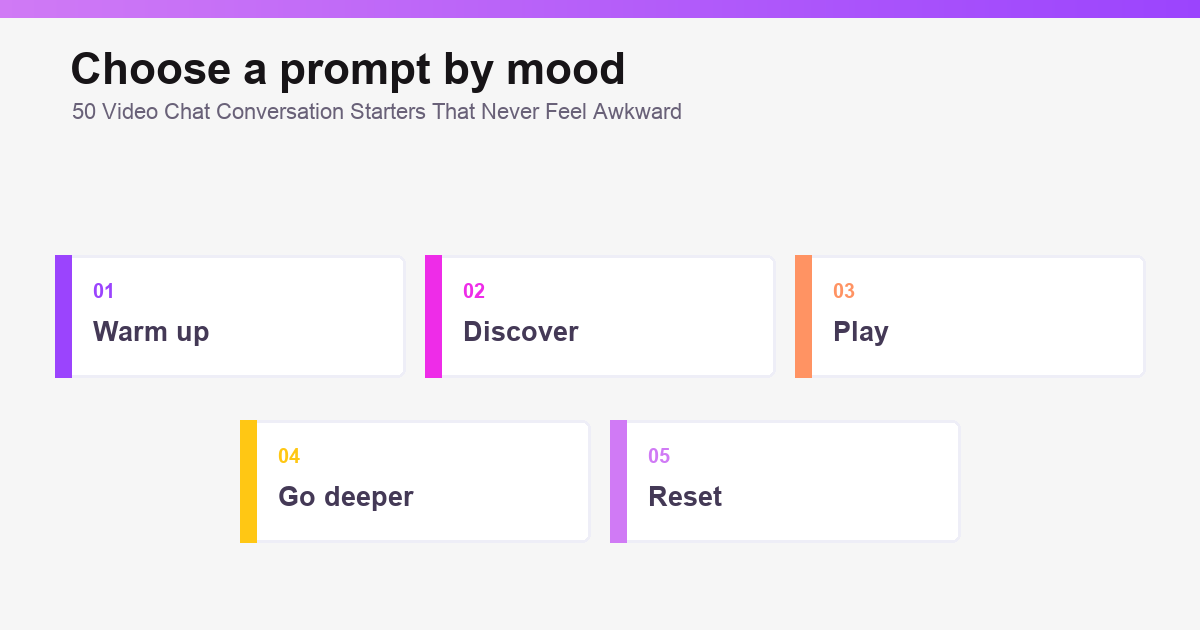
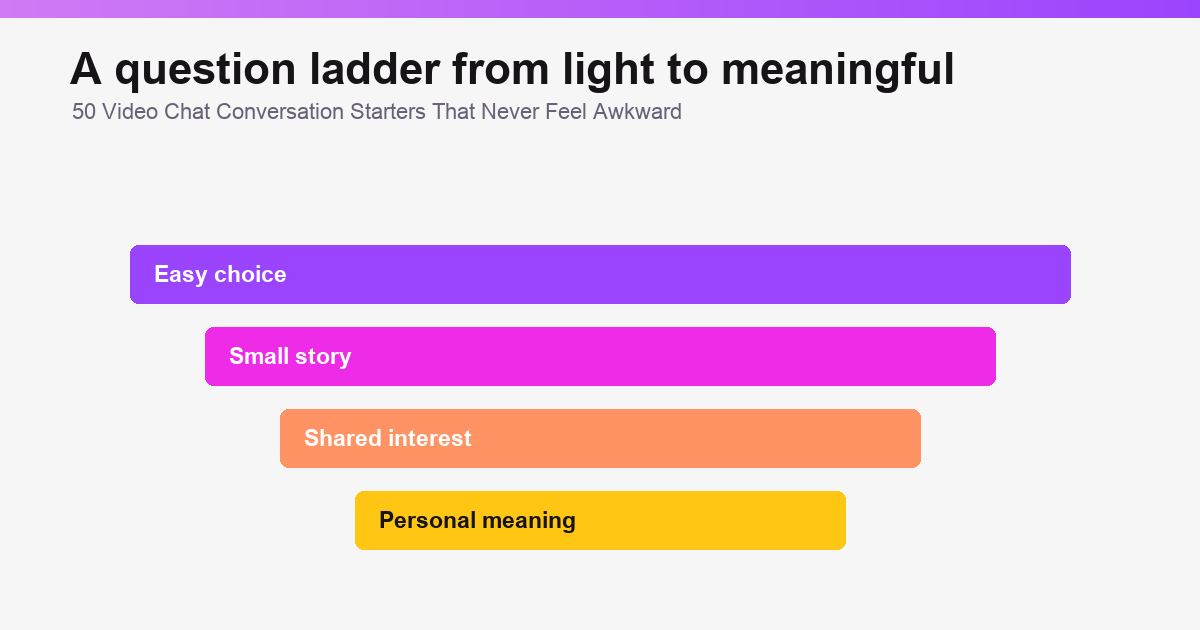
The best video chat conversation starters are easy to answer, reveal more than a yes or no, and leave room for a follow-up. Use this library by mood: begin light, notice what creates energy, and stay with that topic before opening another.
These conversation icebreakers are useful when neither person knows what tone to take.
1v1 Video Chat with Real People | Chamet provides a direct call setting where these questions to ask on video chat can become an actual exchange rather than a checklist.
These video call topics work well across regions and cultures.
Use these conversation icebreakers when the call has energy but needs direction.
Chamet: 1v1 Video Chat & Live Video Call App - Make Chat Borderless combines direct calls with translation and social rooms, giving video chat conversation starters different contexts—from a focused call to a lively group.
These are stronger questions to ask on video chat after the first minute because they invite a scene, not a fact.
Story questions are useful video call topics because a single answer can support several natural follow-ups.
Do not rush these. Use them only when the other person is already sharing comfortably.
Choose one prompt, listen for a detail, and ask one follow-up before moving on. Add your own answer. If you ask several unrelated questions to ask on video chat in a row, the call starts to feel like an interview.
Keep two or three backup video call topics, not fifty. The purpose of video chat conversation starters is to reach a real conversation and then become unnecessary.
Use video chat conversation starters as doors into stories, not as a scorecard for how many questions you can complete.
Open Chamet: Live Video Chat & 1v1 Calls with Strangers when you are ready to practise. Respect boundaries, avoid financial or identifying questions, and leave when the interaction feels wrong.
'%20stroke-width='2'%20stroke-linecap='round'%20stroke-linejoin='round'/%3e%3c/svg%3e)
Start with daily life, music, food, hobbies, culture or easy choices. These topics are personal enough to be interesting without requesting sensitive information.
Two or three conversation icebreakers are enough. A long memorized list can distract you from listening.
Avoid addresses, income, account details, private images, sexual questions and pressure to move off-platform. Good questions respect the other person’s pace.
Not every match has chemistry. End politely and try another conversation rather than forcing a response.
Join millions of users and meet your next best friend today.